

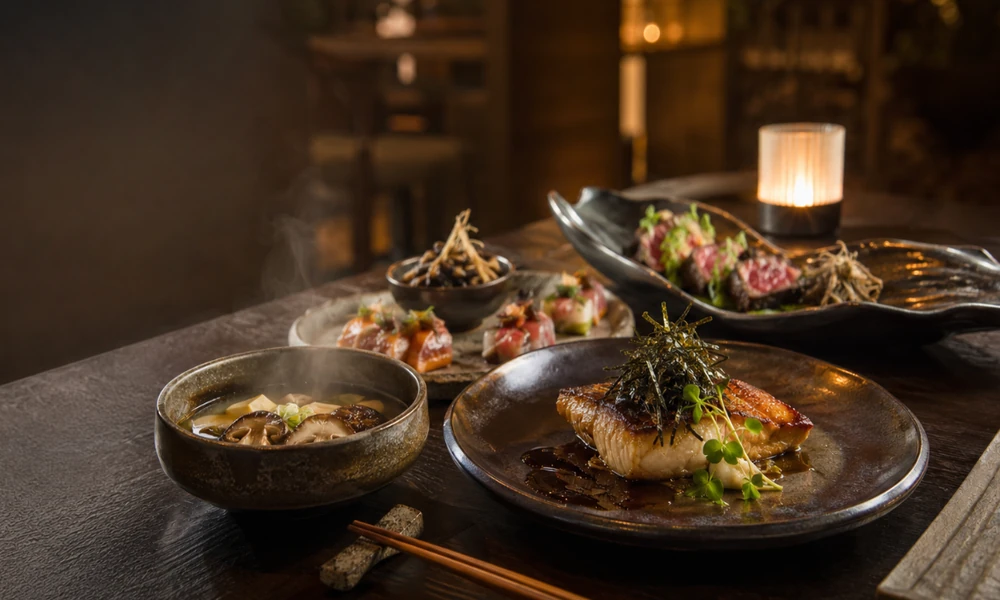
Umami is one of those flavors people notice before they know how to explain it. It is savory, deep, and satisfying. It is the taste that makes broth feel rich, grilled meat feel fuller, and mushrooms feel almost meaty. In Asian fine dining, umami is not just a flavor. It is part of the whole experience.
Many people know sweet, salty, sour, and bitter. Umami is the fifth basic taste. It gives food a rounder and more complete flavor. It does not always shout. Sometimes it sits quietly in the background and makes every bite feel better.
That is why umami matters so much in Asian fine dining.
Asian cooking has used umami-rich ingredients for a long time. Soy sauce, miso, seaweed, mushrooms, fermented pastes, dried fish, shellfish, broths, and aged sauces all bring savory depth. These ingredients are not added just to make food taste stronger. They help build layers.
A simple bowl of broth is a good example. It may look clear and light, but the flavor can feel deep because of kombu, dried mushrooms, bones, seafood, or long simmering. The result is not heavy. It is clean, balanced, and full.
In fine dining, chefs use umami with more control. They think about how one bite leads to the next. A dish may start with something fresh, like raw fish or crisp vegetables. Then a glaze, broth, or fermented element adds depth. The goal is balance. Too much umami can feel salty or tiring. Just enough makes the dish feel complete.
Texture also changes the umami experience. A silky sauce on seared fish feels different from a crisp bite dipped into a savory glaze. A soft mushroom in warm broth feels different from grilled meat with charred edges. The flavor may share the same savory base, but the mouthfeel changes the way you understand it.
That is part of what makes Asian fine dining interesting. It is not only about flavor. It is about timing, texture, temperature, and aroma.
Aromatics also play a big role. Ginger, garlic, scallions, sesame, citrus peel, and herbs can lift rich flavors so they do not feel too heavy. A dish with deep umami still needs brightness. Without contrast, the meal can feel flat.
This is why many Asian fine dining menus move in stages. Lighter dishes often come first. Then richer dishes follow. A clean broth may prepare the palate. A grilled item may bring smoke and depth. A fermented sauce may add complexity. A fresh garnish may reset the taste.
Umami works best when it feels natural. You should not feel like a dish is trying too hard. The best savory flavors often feel calm and steady. You take one bite, then another, and the flavor stays with you.
Pairings can also highlight umami. Tea, sake, light wine, or sparkling drinks can change how savory dishes land on the palate. Some drinks soften saltiness. Others sharpen richness. A clean pairing can make a deep dish feel lighter, while a fuller pairing can make a delicate dish feel more rounded.
For diners, understanding umami makes the meal more enjoyable. You begin to notice why a broth tastes comforting, why a sauce feels complex, or why a mushroom dish feels satisfying even without meat. You also start to see how small details matter.
Asian fine dining uses umami to create depth without clutter. It turns simple ingredients into layered dishes. It makes food feel thoughtful, not just flavorful.
At its best, umami gives a meal a lasting quality. It is the flavor that makes you pause for a second. It is not always loud, but it stays with you. And in a fine dining setting, that quiet depth can be the difference between a good dish and a memorable one.
This post was written by a professional at Fortu. Fortu stands out among the top Restaurants St Petersburg FL, offering an elevated Pan-Asian dining experience in the heart of St. Petersburg, Florida. Celebrating Asia’s vibrant and diverse culture, Fortu introduces bright and bold flavors to a bright and bold city with a menu of locally and sustainably sourced options, from small bites to hearty delicacies. Whether winding down from a beach day or celebrating a special occasion, guests can enjoy a lush, alluring atmosphere and an authentic taste of Asia’s divine cuisine at one of the finest Best Restaurants Downtown St Petersburg.