

Key Highlights
- Buffet-style catering carries hidden setup and clean-up overhead.
- Bento boxes remove the risk of popular dishes running out early.
- Clean-up drops to a single container per person with boxed meals.
- Recurring weekly lunches benefit most from the switch to boxes.
- Large celebrations still suit a traditional shared spread better.
A Smarter Approach to Office Dining
Most offices don’t dread lunch because of the food itself; they dread it because of everything that comes with feeding a group: trays, serving spoons, someone left holding a half-empty dish of rice at three o’clock. Once you’ve run a few rounds of corporate catering this way, the appeal of something simpler becomes obvious fairly quickly, usually somewhere around the third clean-up of the week.
That’s really the case for switching formats altogether. Office teams that have tried bento box catering once rarely go back to buffet trays, not because the food is dramatically different, but because so much of the hassle disappears along with the serving line.
The Trouble With Traditional Office Catering
A buffet-style spread looks generous on paper, but it comes with a fair amount of hidden overhead. Someone has to set it up, someone has to manage the queue, and someone has to deal with what’s left over once people have gone back to their desks. None of that is difficult exactly; it’s just extra work layered on top of an already busy day for whoever ends up organising it.
There’s also the portion problem. Shared trays tend to run out of the popular items first, leaving latecomers with whatever’s left, which isn’t much of a compliment to a meal you’ve actually paid for and expected everyone to enjoy equally.
What Makes Bento Boxes Simpler to Manage
A handful of practical differences explain why so many offices have quietly moved their weekly corporate catering budget towards individually boxed meals instead of trays:
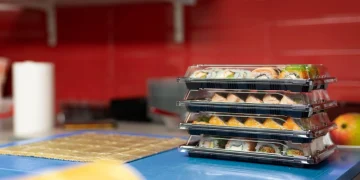
- Each box arrives pre-portioned, so there’s no risk of running short on a popular dish.
- Labelling happens once per box, not once per shared tray of mixed ingredients.
- Clean-up is a matter of tossing one container, not washing serving dishes.
- Latecomers get the same meal as everyone else, not the leftovers.
- Delivery can be staggered by floor or department without extra coordination.
None of these points involves the food being healthier or more elaborate; they’re simply about removing friction from an otherwise ordinary Tuesday lunch.
Buffet vs Bento: Where the Effort Actually Goes
The two formats aren’t just different in presentation, since switching to bento box catering moves where the actual labour ends up:
| Task | Buffet Catering | Bento Box Meals |
| Setup time | 20 to 30 minutes on-site | None, boxes arrive ready |
| Serving staff needed | Usually yes | Not typically required |
| Portion control | Managed informally by guests | Fixed per box in advance |
| Post-meal clean-up | Trays, utensils and surfaces | A single container per person |
| Dietary handling | Verbal check-ins at the table | Labelled clearly before arrival |
Once laid out this way, it’s much easier to see why an office running frequent lunches would gravitate towards the format that asks less of everyone involved.
When Bento Boxes Make the Most Sense
Not every occasion calls for individually boxed meals, but a good few line up naturally. Recurring weekly lunches benefit most, since the time saved on setup and clean-up adds up quickly once you’re doing it every Tuesday rather than once a quarter. Hybrid teams also do well with this format, since bento box catering can be delivered on a rolling basis as people arrive rather than all at once.
Larger, one-off celebrations are really where a traditional spread, corporate catering in its classic form, still holds an edge, mostly because a shared table adds to the occasion in a way that individual boxes don’t quite replicate on a birthday or a milestone event.
Choosing the Best Catering Strategy
Choosing between a buffet and individually boxed meals usually comes down to how often you’re feeding the same group and how much friction you’re willing to tolerate along the way. For recurring office lunches, boxes tend to win on nearly every practical measure, from setup time to what happens once the meal is over.
None of this means buffets have no place, but for the average working week, boxed meals solve more problems than they create, without adding much cost or complexity to the process.
Contact Alice Boulangerie to see how a bento box setup could simplify your office’s regular weekly lunch routine.